REBAR
REBAR


 CEMENT



 PLUMBING
 ELECTRICAL
 SANITARY
 BATHWARE
 PAINT
PAINT


 FLOORING
 HARDWARE





Core Building Construction Materials – Cement
The columns-beams-slabs made of concrete and the walls made of bricks and plaster are the most important structural components of a building construction. Cement, sand, stone chips, water, steel reinforcement, and other ingredients are used to make concrete, mortar, and plaster. And, on any site, one should keep an eye out for the quality of these materials, as this can have a significant impact on the overall construction.
People building houses can never be certain of the quality of the materials brought to the job site by the contractor. To assist you, some of the characteristics that indicate high-quality building materials are described here.
CEMENT:
Usage of Cement in Buildings:
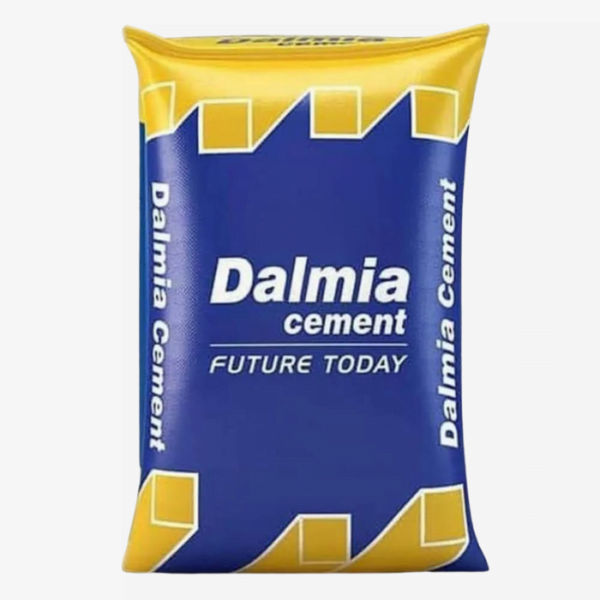
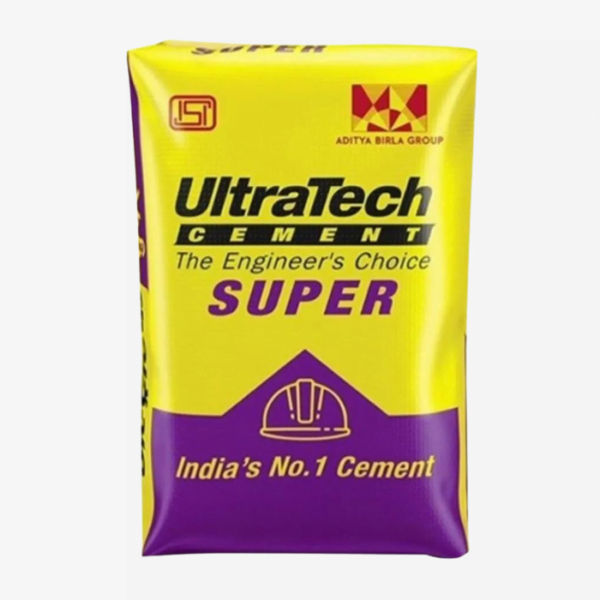
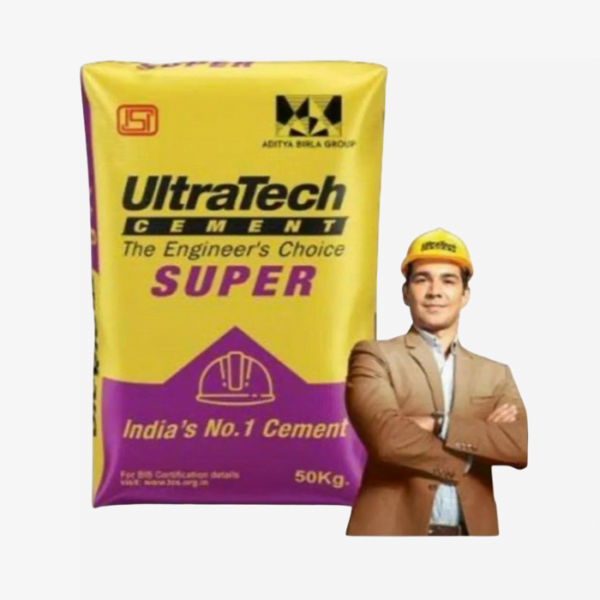
In brief, Cement is the binder that holds concrete and mortars together, so it is crucial in providing strength and durability to your home. It is used in the production of concrete for slabs, foundations, beams, columns, lintels, chhajja (sunshades), and mortar for brickwork, plastering, flooring, and other similar applications.
- Ordinary Portland Cement (OPC): A combination of clinker and gypsum.
- Portland Slag Cement (PSC): A combination of good quality blast furnace slag (from the iron and steel industry) with clinker (which makes OPC) and gypsum.
- Portland Pozzolana Cement (PPC): A combination of fly-ash (from thermal power plants) with clinker and gypsum.
Ideal cement for house construction:
Blended cement, such as PSC and PPC, is ideal for house construction. However, high-quality blended cements such as PSC and PPC will take longer to set. However, after 28 days, the final strength will be much higher.
Features of good quality cement:
- Reduced water requirement.
- Improved workability .
- Less permeable to moisture.
- Improved resistance to acids and chlorides.
- Reduced heat of hydration.
- Easier to finish.
- Reduced shrinkage.
- Reduced leaching problems because it is low on free lime.
The colour of cement has nothing to do with its strength. There is a common misconception that darker coloured cement is stronger. In fact, darker coloured cement forces workers to use more sand than is permitted in cement-sand mortar for plastering, which can lead to problems.
Selecting the right cement for your house:
Use only cement from well-known brands, as this is crucial. Decent cement brands may cost 2 to 5% more, but they include qualities like quality, consistency, and dependability in addition to strength attributes that are 10 to 20% stronger. 12–18% of the overall cost of your home is just spent on cement. Thus, employing less expensive cement results in minimal overall savings but a larger risk to the stability of your building!
The right way of using cement in construction:
The addition of cement to the concrete and mortar must be accurate and regular. Lower strengths, a shorter design life, and less durability are brought on by inappropriate water-cement ratios and too little or too much cement in concrete. Never attempt to reduce cement consumption by dilution the concrete mixture. Recall that you would only save between Rs. 3000 and Rs. 4000 by utilising 30 to 40 fewer bags of cement.
FAQs - Cement
Cement manufacturers mine materials such as limestone, shale, iron ore, and clay, crushed and screened the rock, and place it in a cement kiln. After being heated to extremely high temperatures, these materials form a small ball called “clinker” that is very finely grounded to produce portland cement.
Lime and silica make up about 85 percent of the ingredients of cement. Other elements include alumina and iron oxide. The rotating kiln that cooks the materials resembles a large horizontal pipe with a diameter of 10 to 15 feet and a length of 300 feet or more. One end is raised slightly. The raw mix is placed in the high end and as the kiln rotates the materials move slowly toward the lower end. Flame jets at the lower end heat all the materials in the kiln to high temperatures that range between 2,700 and 3,000 degrees Fahrenheit. This high heat drives off, or calcines, the chemically combined water and carbon dioxide from the raw materials and forms new compounds (tricalcium silicate, dicalcium silicate, tricalcium aluminate and tetracalcium aluminoferrite). For each ton of material that goes into the feed end of the kiln, two thirds of a ton comes out the discharge end, called clinker. This clinker is in the form of marble sized pellets. The clinker is very finely ground to produce portland cement. Manufacturers often add gypsum and/or limestone during the grinding process.
Although the terms cement and concrete often are used interchangeably, cement is actually an ingredient of concrete. Concrete is a mixture of aggregates and paste. The aggregates are sand and gravel or crushed stone; the paste is water and portland cement.
Cement comprises from 10 to 15 percent of the concrete mix, by volume. Through a process called hydration, the cement and water harden and bind the aggregates into a rocklike mass. This hardening process continues for years meaning that concrete gets stronger as it gets older.
Portland cement is not a brand name, but the generic term for the type of cement used in virtually all concrete, just as stainless is a type of steel and sterling a type of silver. Therefore, there is no such thing as a cement sidewalk, or a cement mixer; the proper terms are concrete sidewalk and concrete mixer.
Cement is the simplest approach to increase strength. The proportion of water to cement in the cement paste holding the particles together is the factor that most significantly affects concrete strength. The concrete will be weaker and vice versa the higher this percentage is. More water will have a negative impact on every measurable good physical characteristic.
Concrete hydrates, becoming stronger and hardening. The process of hydration goes on for a very long time. It begins quickly and then slows down over time. It would take several years before concrete’s ultimate strength could be determined. This would not be feasible, thus the specification drafting authorities decided that all concrete should be tested after 28 days. At this age, a large portion of the hydration has already occurred.
Concrete, like all other materials, will slightly change in volume when it dries out. In typical concrete this change amounts to about 500 millionths. Translated into dimensions-this is about 1/16 of an inch in 10 feet. The reason that contractors put joints in concrete pavements and floors is to allow the concrete to crack in a neat, straight line at the joint when the volume of the concrete changes due to shrinkage.
| Concrete Grade | Mix Ratio | Compressive Strength | |
| MPa (N/mm2) | psi | ||
| Normal Grade of Concrete | |||
| M5 | 1 : 5 : 10 | 5 MPa | 725 psi |
| M7.5 | 1 : 4 : 8 | 7.5 MPa | 1087 psi |
| M10 | 1 : 3 : 6 | 10 MPa | 1450 psi |
| M15 | 1 : 2 : 4 | 15 MPa | 2175 psi |
| M20 | 1 : 1.5 : 3 | 20 MPa | 2900 psi |
| Standard Grade of Concrete | |||
| M25 | 1 : 1 : 2 | 25 MPa | 3625 psi |
| M30 | Design Mix | 30 MPa | 4350 psi |
| M35 | Design Mix | 35 MPa | 5075 psi |
| M40 | Design Mix | 40 MPa | 5800 psi |
| M45 | Design Mix | 45 MPa | 6525 psi |
| High Strength Concrete Grades | |||
| M50 | Design Mix | 50 MPa | 7250 psi |
| M55 | Design Mix | 55 MPa | 7975 psi |
| M60 | Design Mix | 60 MPa | 8700 psi |
| M65 | Design Mix | 65 MPa | 9425 psi |
| M70 | Design Mix | 70 MPa | 10150 psi |